The complete guide to Japanese love hotels
Everything first-timers need to know — how they work, what they cost, and the etiquette that keeps them so private.
A short history
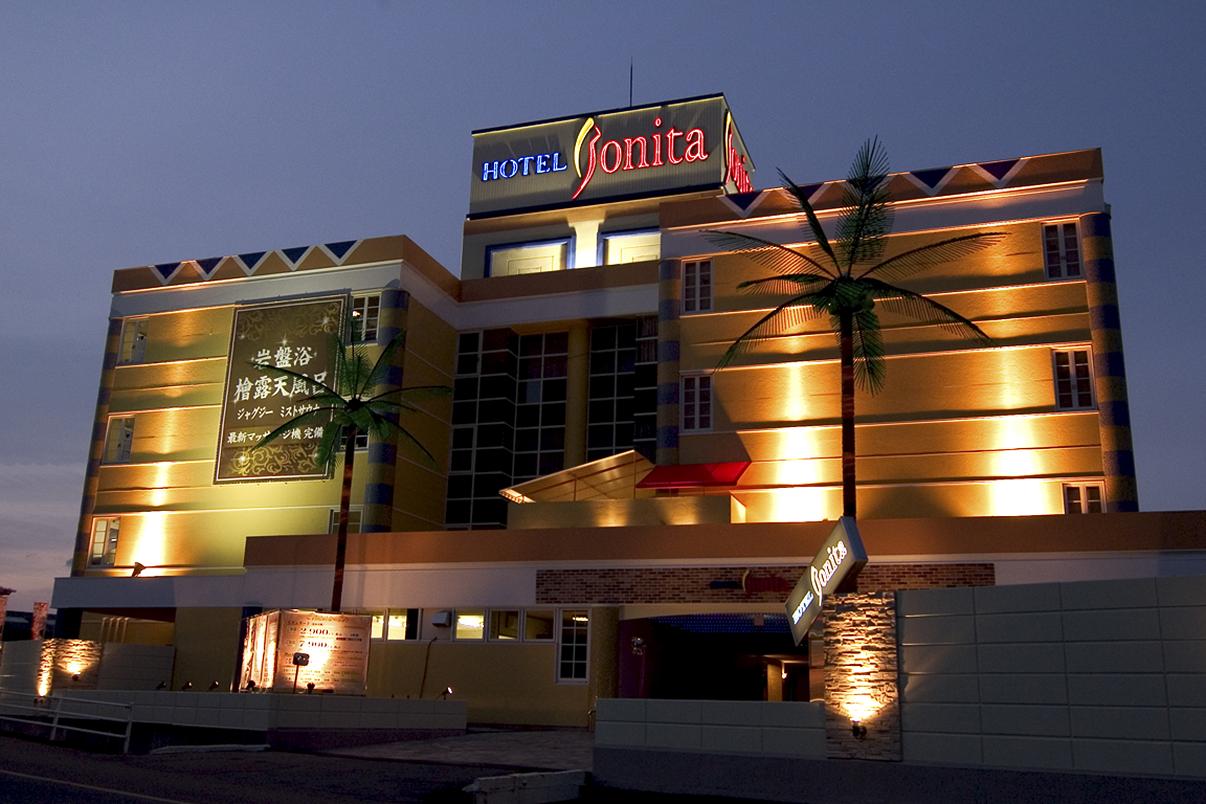
Love hotels grew out of the tsurekomi yado (“bring-along inns”) of post-war Japan. In crowded cities where generations shared small homes, couples needed somewhere private. The first neon-crowned “love hotels” appeared in the late 1960s, and the name stuck after Osaka's famous Hotel Love opened with a rotating sign.
The 1970s and 80s brought fantasy architecture — castles, ships, and rooms with rotating beds. Modern love hotels are more boutique than kitsch: designer interiors, spa-grade bathrooms and smart tech, while keeping the anonymity that makes them unique.
Who uses them?
Everyone. Married couples escaping the kids, young couples living with parents, and increasingly tourists who find a love hotel cheaper and more fun than a standard hotel for a night. Many now welcome international guests and have English signage.
Dos and don'ts
✅ Do
- Check the posted Rest / Stay times and prices before entering
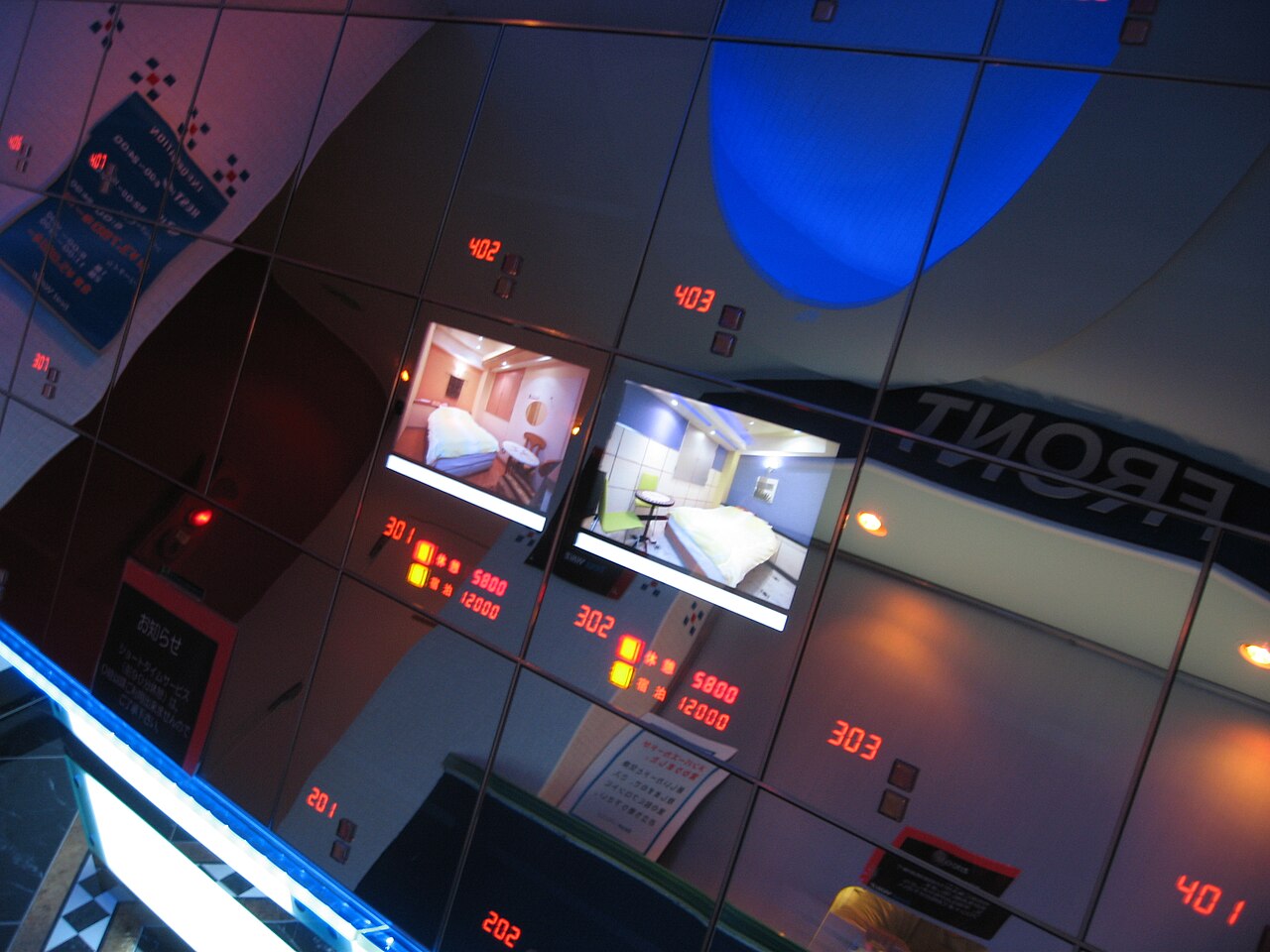
- Pick your room on the panel — lit photos are available
- Bring cash as a back-up; many older hotels don't take cards
- Call the front desk with the in-room phone if you need anything
- Use the free amenities — they're part of the price
🚫 Don't
- Expect to check in alone — most hotels are for couples only
- Linger in the lobby or corridors; privacy is everything
- Try to leave before paying — doors often lock until you settle up
- Bring more than two people unless the hotel allows groups
- Smoke in non-smoking rooms (look for 禁煙 kin'en)
Signs you'll see at the door
A short stay, usually 1–3 hours.
Overnight, typically from late evening to late morning.
A long daytime block at a flat rate.
Rooms available. Lit up at the entrance.
No rooms available right now.
Extra time, charged per 30 or 60 minutes.
The button on the payment machine.
Discounted daytime package.
Understanding the sign
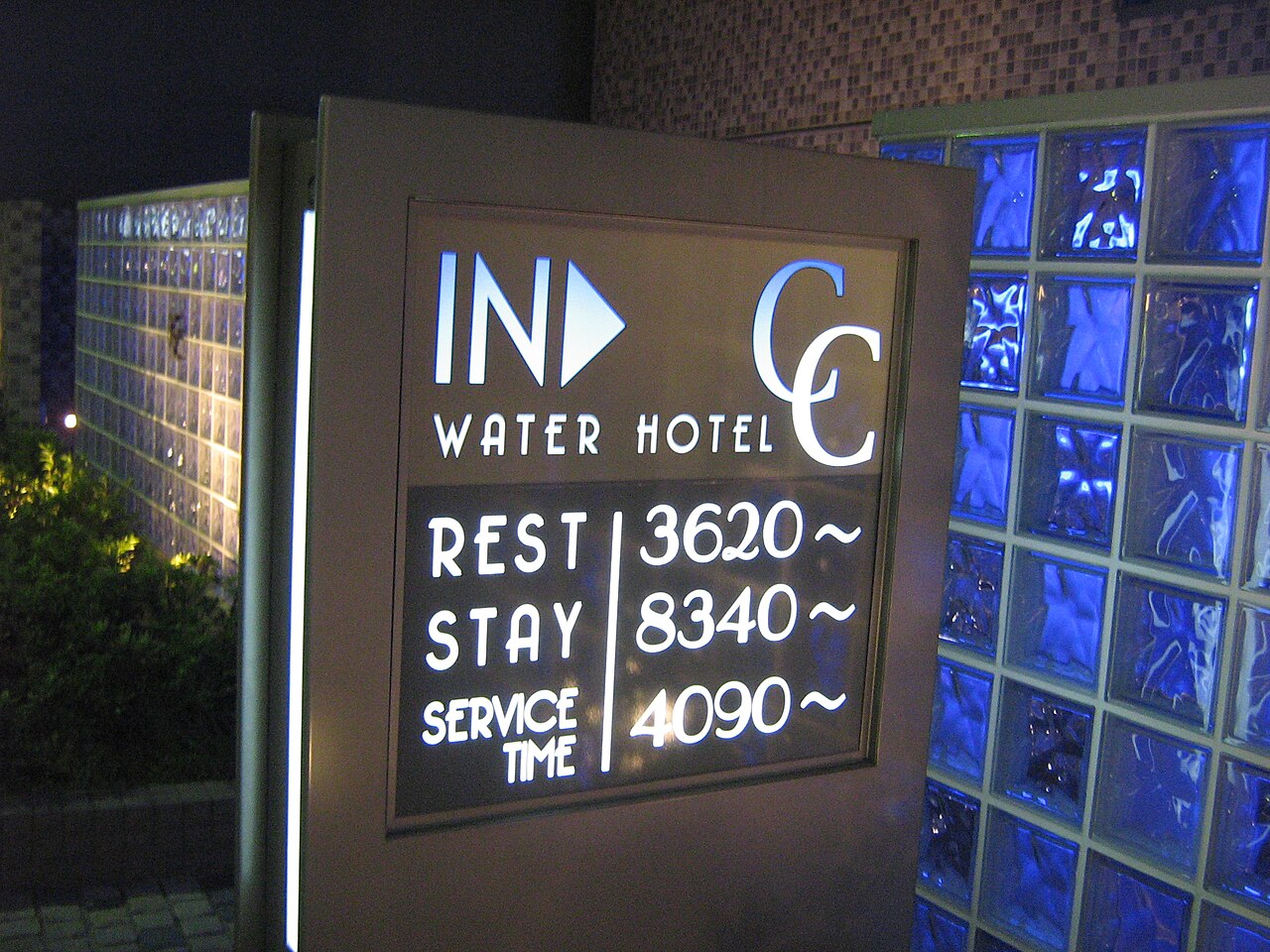
Most hotels post a board at the entrance like this one. REST is the short-stay rate, STAY is overnight, and SERVICE TIME is a discounted daytime block.
The “~” after a price means “from” — premium rooms with jacuzzis or saunas cost more. Weekend and holiday rates are usually higher, and some hotels add a surcharge after midnight.
Compare hotel pricesFrequently asked questions
Can foreigners stay at Japanese love hotels?
Yes. The vast majority of love hotels welcome international guests, and many now have English signage and touch-screen panels. Because check-in is self-service, you rarely need to speak Japanese at all.
Do I need to book in advance?
Usually not — love hotels are built for walk-ins, 24 hours a day. On Friday and Saturday nights popular rooms fill up, so arriving earlier helps. Online booking through JapaneseLoveHotel.com is coming soon.
Are love hotels clean and safe?
Very. Rooms are thoroughly cleaned between every guest, and modern hotels pride themselves on hygiene, fresh linen and sealed amenities.
Can I stay at a love hotel alone or as a group?
Policies vary. Some allow solo travellers (especially for overnight stays), while most are strictly for two. A few larger hotels offer party rooms for groups — check each listing.
How do I pay?
Payment is made at checkout, either at an automatic machine in the room, through a pneumatic tube, or at a discreet window. Cash is universal; many hotels now accept credit cards and IC cards.
Can same-sex couples use love hotels?
Many love hotels welcome same-sex couples, though some older establishments still have restrictive policies. We highlight LGBTQ+-friendly hotels in our listings.
Is there a minimum age?
Yes — love hotels are for adults only, and guests must be 18 or older.
Images used on this site
Photos via Wikimedia Commons under the licences shown. Click a title for the original file and licence details.
-
- Colorful neon street signs in Kabukichō, Shinjuku, Tokyo.jpg — Basile Morin, CC BY-SA 4.0
- Love hotel room.jpg — Cassiopeia sweet, Public domain
- HOTEL BAMBOO GARDEN Kinshichō Room 701.jpg — Stck w, CC BY-SA 4.0
- 2016-7-29 Love hotel in Japan2.jpg — Taro LoveHo, CC BY-SA 4.0
- 2016-7-29 Love hotel in Japan4.jpg — Taro LoveHo, CC BY-SA 4.0
- Love Hotel At Dusk.jpg — New Perspective Y.K., CC BY 4.0
- Shibuya - Hotel Sunreon (love hotel) 01 (15554736517).jpg — Joe Mabel on Flickr as Joe Mabel from Seattle, US, CC BY-SA 3.0
- Hotel La Seine, Shiohama, Ichikawa, Chiba, Japan, January 21, 2023.jpg — 要塞騎士, CC BY-SA 4.0
- Love Hotel - Tokyo.jpg — Jason7825, CC BY-SA 3.0
- Snap shot on Love hotel street, Shibuya Hyakken-dana.jpg — Connie, CC BY 2.0
- 2016-7-29 Love hotels in Japan1.jpg — Taro LoveHo, CC BY-SA 4.0
- Love hotel payment machine.jpg — New Perspective Y.K., CC BY 4.0
- ラブホ料金 (443566907).jpg — Gavin Anderson, CC BY-SA 2.0
- Kabukicho red gate and colorful neon street signs at night, Shinjuku, Tokyo, Japan.jpg — Basile Morin, CC BY-SA 4.0
- Osaka Dotonbori yoru.jpg — Sakai Yayoi, CC0
- Streets of Gion, Kyoto - Gion7708.jpg — lumoplank, CC0
- Shibuya at Night (30323974248).jpg — Fabio Achilli from Milano, Italy, CC BY 2.0